FARMING FOR PROFIT
Rick Clark, Farm Green
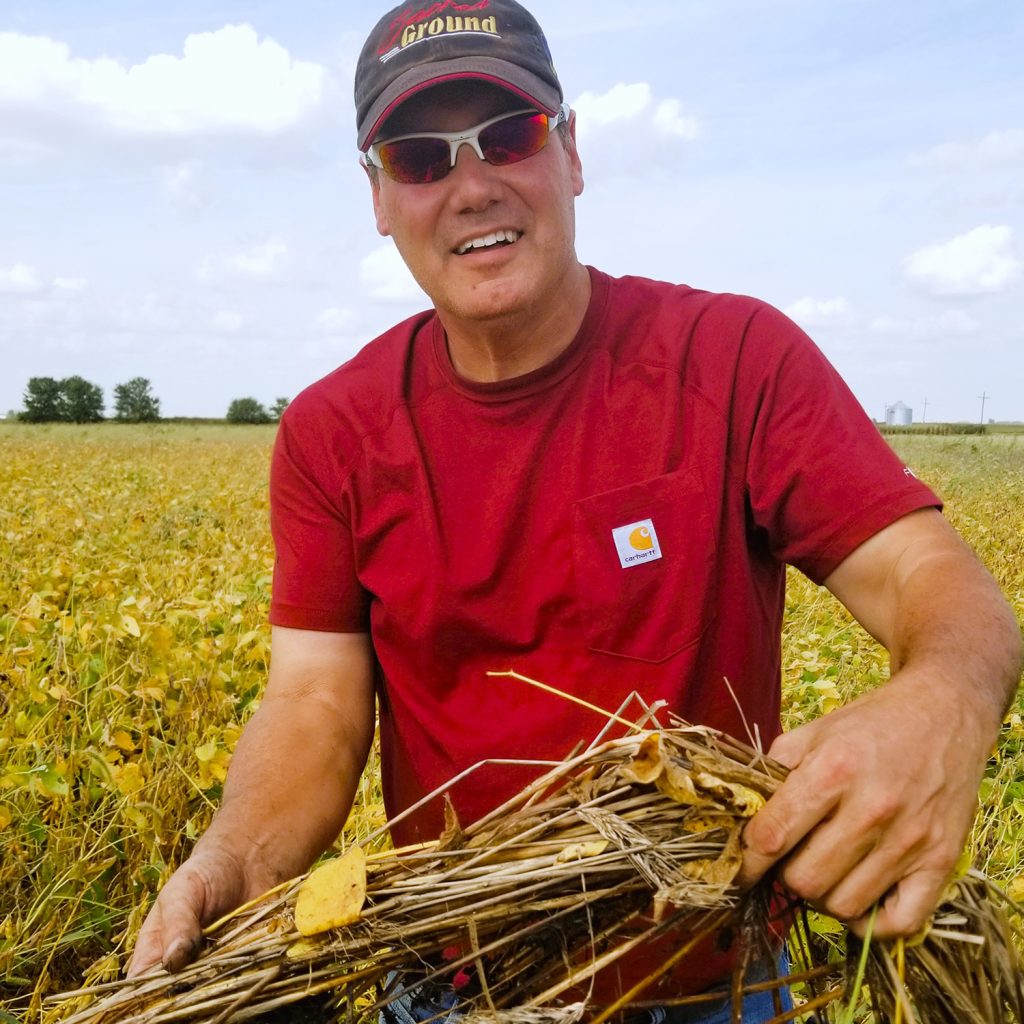
As a 5th generation farmer from Williamsport, Indiana, I’ve seen firsthand how industrial farming techniques can degrade the soil over decades and the cost of trying to mimic a healthy soil with fertilizer, pesticides, and herbicides. My 7,000-acre farm had been tilled extensively with heavy input applications since the 1880s. About 15 years ago I was driven by the need to defend my soil from erosion, so I decided to make a radical change towards regenerative practices.
The core principles driving my transformations are: minimize disturbance to the soil, avoid chemicals, maximize diversity of plant life, keep living roots in the ground as many days as possible, armor the soil with cover crops, adapt practices to the unique context of my land, integrate livestock when possible, and stay committed through the transition.
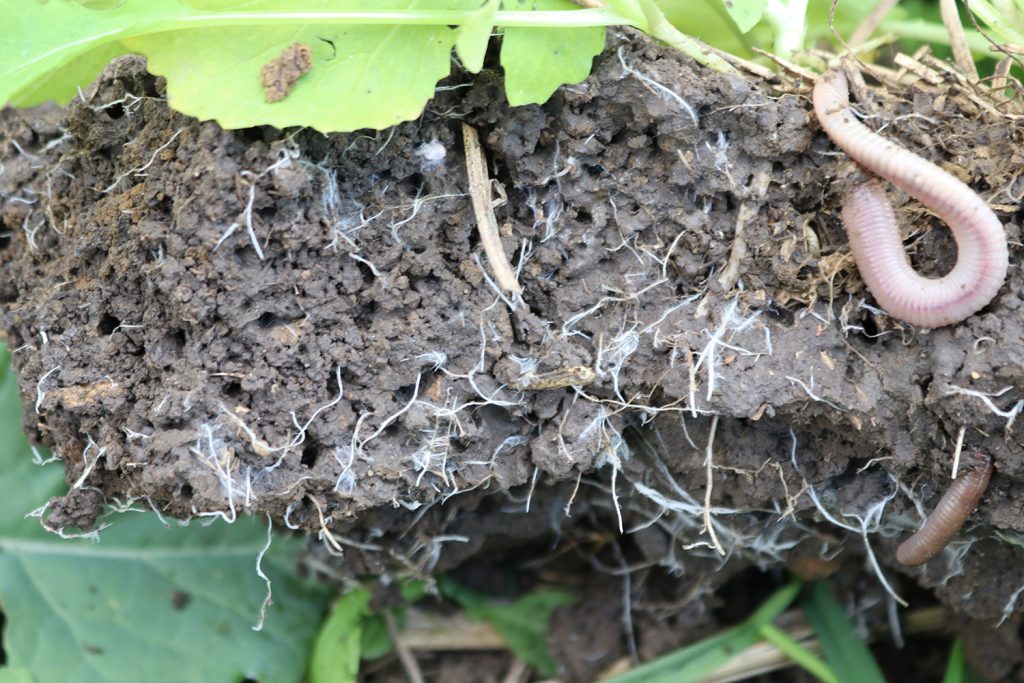
It hasn’t been easy, but the results speak for themselves. My soil has shifted to a fungal-dominated system with extensive networks of arbuscular mycorrhizal fungi, the communication backbone for the entire soil microbial biome. The earthworm counts, nutrient availability, water infiltration rates, and aggregate stability have all dramatically improved.
Diversity is key to building soil health. I plant multiple species of cover crops like cereal rye, winter peas, grasses, brassicas, and clover to feed the diverse microbial communities. I’ve even started planting multiple cash crops together in the same fields. The diversity above ground feeds the diversity below ground.
“If you are not uncomfortable with what you are doing, then you are not trying hard enough to change.”
Instead of fighting Mother Nature with intensive tillage and chemicals, I work with her. I’ve eliminated synthetic fertilizers by growing nitrogen-fixing legume mixtures and relying on the nutrient cycles, and I’ve cut herbicides by planting cereal rye mixtures to suppress weeds.
This transition challenged me to be flexible, patient, and open to constant learning and adjustments. There were years I had to sacrifice some yield to build long-term soil health. But the financial payoff has been worth it – my profits have increased as I’ve completely removed expensive inputs from my system.
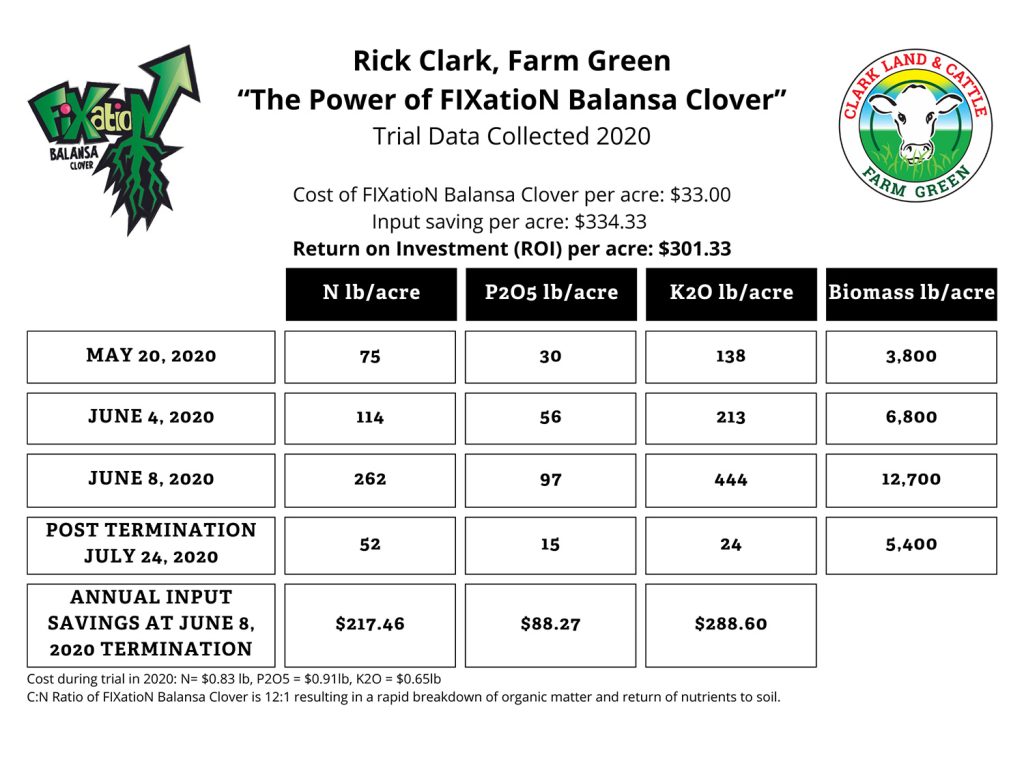
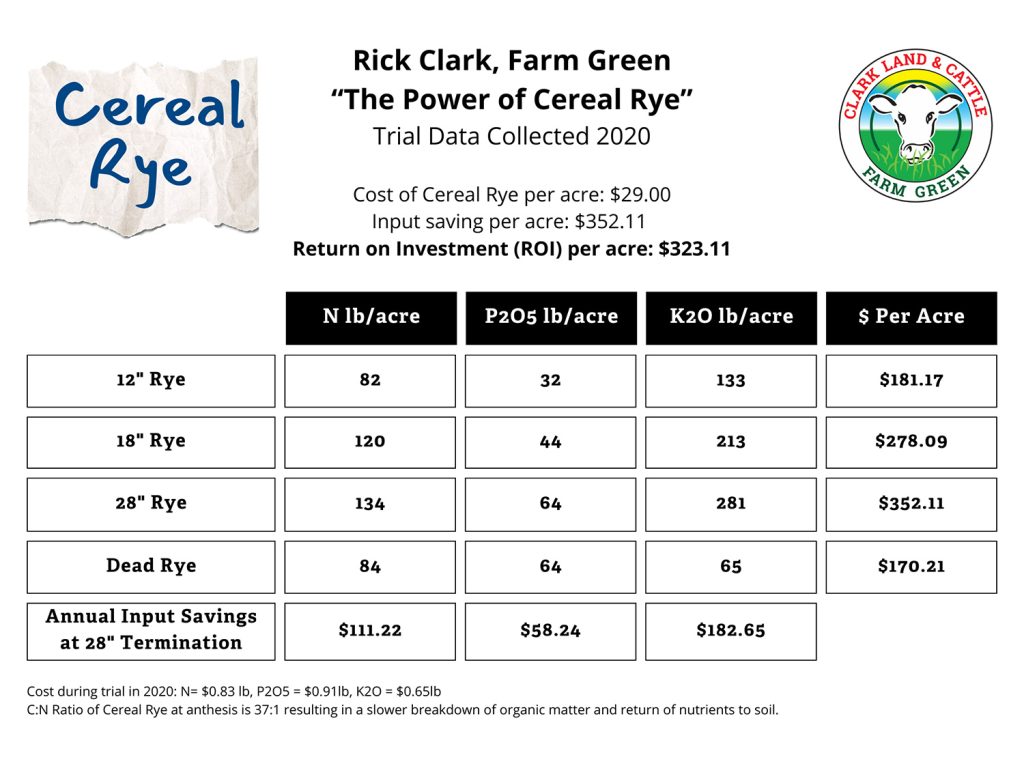
In my land cover cropped with cereal rye and FIXatioN Balansa Clover I took 2’x2’ samples of the above ground biomass and sent it to the lab to analyze its nutrients on three different dates in the spring.
I was blown away to see how the nitrogen content had doubled with the clover from June 4 to June 8! By letting it grow just four more days, the cover crop biomass was able to put on an additional 140 lbs of nitrogen, 40 lbs phosphorus, and over 200 lbs of potassium. That translated to roughly $595 worth of nutrients. I reduced my fertilizer bill and now focus my entire fertility program on supporting the biological capacity of the soil.
While conventional farming aims to maximize yield through external inputs, regenerative practices optimize soil health and overall profitability. This approach restores balance with nature to create a fertile, resilient system that can sustain my family’s farm for generations.
I’m proud to be a farmer, but I’m most proud of how I farm, working in harmony with the land instead of exploiting it. The path hasn’t been easy, but the validation comes in the life teeming in my soil and the promising future for my grandchildren’s inheritance.
If you’re considering a transition to regenerative practices, start small with humble patience. Be willing to be uncomfortable and go against conventional wisdom. Carefully observe what works for your unique soil context. Most of all, commit to being a faithful steward of your soil’s health. The rewards will extend far beyond your farm to a more sustainable food system.
I challenge my readers to plant their cover crop, wait as long as possible to terminate, measure the nutrients in their biomass, and reduce their nitrogen applications by half the N sequestered. Watch your profits continue to grow as your soil benefits from the ongoing gifts provided by cover cropping.
Rick Clark is available for private consultations and speaking engagements. Visit
www.farmgreen.land for more information.